Integrating Seedance Pro API for Efficient AI Model Access
Getting Started with Seedance Pro API
When you first look at the seedance pro api, the immediate impression is that it simplifies something that has become unnecessarily complex. Developers who have worked with multiple AI model providers know the pain of managing separate keys, different rate limits, and inconsistent documentation. The seedance pro api uberllm approach changes that by offering a single endpoint that routes requests to the most cost-effective model available at that moment.
The key insight here is that not all AI models are created equal for every task. Some excel at creative writing, others at code generation, and a few at structured data extraction. What the seedance pro api does is let you specify the task type rather than a specific model. The platform then selects from its pool of sellers which model and provider can handle that task at the best price. This is particularly useful for applications where cost varies throughout the day based on demand and seller competition.
How the Routing Logic Works
Behind the scenes, the seedance pro api maintains a real-time marketplace of AI model sellers. Each seller sets their own price for access to a particular model, and the platform routes your request to the seller offering the best combination of price and performance for your specific task. This competitive routing means you are not locked into a single provider's pricing structure. If one seller raises their rate, the next request may automatically go to a different seller who offers a better deal.
The seedance pro api uberllm implementation handles all the complexity of authentication, request formatting, and response parsing. You send a standardised request, and the platform handles the translation into whatever format the selected model expects. This abstraction layer is what makes the API so attractive for teams that want to avoid vendor lock-in without rewriting their integration every time they switch providers.
Practical Considerations for Integration
When integrating the seedance pro api, you need to think about a few things. First, the quality of responses can vary between sellers even for the same model. Some sellers may cache responses or use optimised inference pipelines that affect output quality. The platform provides quality metrics for each seller, but you should test with your specific use cases before relying on it in production.
Second, latency can fluctuate. Because the routing logic selects sellers based on price and availability, a request might go to a seller with slightly higher latency if that seller offers a significantly lower price. For real-time applications like chatbots, you may want to set a maximum acceptable latency in your request parameters. The seedance pro api allows you to specify constraints, so you can balance cost against speed.
Error Handling and Fallbacks
No API is perfect, and the seedance pro api is no exception. You should implement proper error handling for cases where no seller can fulfill a request within your constraints. The API returns clear error codes when a seller is down or when the requested model is temporarily unavailable. A good pattern is to catch these errors and retry with broader constraints, or fall back to a simpler model that is more widely available.
For critical applications, consider setting up a fallback pipeline that uses a different API or a local model if the seedance pro api is unreachable. This adds resilience without adding much complexity. The seedance pro api uberllm integration typically involves just a few hundred lines of code, so maintaining a fallback is straightforward.
Comparing with Direct Provider APIs
There are trade-offs between using a marketplace API like this and going directly to a provider. Direct APIs give you more control over model selection and parameters, and you may get slightly better latency since there is no intermediary. However, you also have to manage multiple accounts, track separate billing, and handle provider-specific quirks. For small teams or projects that use AI sporadically, the overhead of managing multiple direct integrations often outweighs the benefits.
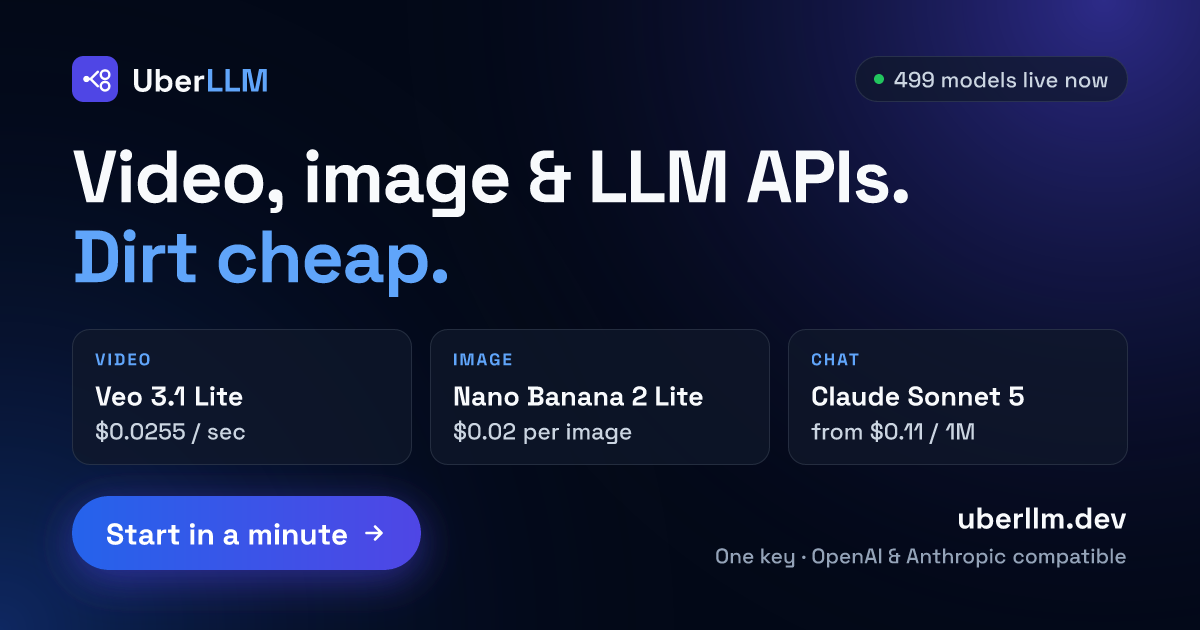
The marketplace model shines when you need flexibility. If a particular provider raises prices or changes their terms, you can simply adjust your routing preferences rather than rewriting your integration. This is especially valuable for startups that cannot afford to be locked into a single vendor's pricing changes. The seedance pro api gives you the ability to switch providers without changing your code, which is a significant operational advantage.
Security and Data Handling
When sending data through a marketplace API, you need to consider where your data goes. The seedance pro api acts as a proxy, meaning your request data passes through the platform before reaching the seller. The platform encrypts data in transit and does not log request contents beyond what is needed for billing. However, you should review the platform's data handling policies and ensure they comply with your requirements, especially if you are processing sensitive information.
For applications that handle personally identifiable information or confidential business data, you may want to use a dedicated seller that offers data isolation guarantees. The platform allows you to specify preferred sellers, so you can route sensitive requests to sellers who have agreed to stricter data handling terms. This flexibility is a strong reason to consider the seedance pro api for production workloads.
Monitoring and Observability
Once your integration is live, monitoring becomes important. The API provides usage logs and performance metrics that you can use to track costs, latency, and error rates. Set up alerts for unusual spikes in cost or error rates, which could indicate a seller issue or a change in routing behaviour. Over time, you can use these metrics to fine-tune your routing preferences, such as excluding sellers with poor reliability or high latency.
UberLLM, the platform behind the seedance pro api, offers basic analytics dashboards that give you visibility into your usage patterns. You can see which models and sellers are used most frequently, and how costs break down by task type. This data is useful for budgeting and for deciding when to negotiate custom pricing with a seller directly.
Final Thoughts
Adopting a marketplace API for AI model access is a strategic decision that depends on your specific needs. If you value flexibility, cost optimisation through competition, and reduced integration overhead, the seedance pro api makes a strong case. It brings the benefits of a competitive marketplace to AI model consumption, which is a refreshing change from the typical take-it-or-leave-it pricing of direct provider APIs.
UberLLM continues to expand its seller network, which means the selection of models and pricing options will only grow over time. For developers building AI-powered applications, the ability to access multiple models through a single API with automatic cost optimisation is a practical advantage that simplifies both development and operations.